
Is It Worth Fixing Packaging That’s Already in Production?

The hardest packaging decision usually comes after launch. The tray is approved, tooled and running, and then the reports start showing damaged product, cracked closures or trays that fight the line.
Reopening the design means diagnosis, prototypes, possibly new tooling and a stretch of time while the fix is proven out. Living with the problem can feel like the safer choice, because at least its costs are familiar.
Those costs are usually larger than they look, and a well-run packaging redesign is far more targeted than most buyers expect. Handled properly, it can be proven out without putting your production schedule at risk.
What Does Living With a Flawed Tray Actually Cost?
A damaging tray rarely appears as one line in the budget. Some of its cost shows up as product you can no longer sell or use, and every damaged unit takes the full cost of making it along with it. In precision manufacturing, a single chip or scratch can scrap a component outright. Some cost shows up on the floor, where extra inspection and improvised padding become part of the routine and get paid for on every shipment. The rest shows up with your customer, as claims and harder conversations about reliability.
Because no single department owns all of it, a flawed tray can survive for years. Added together, the recurring cost of living with the problem usually outweighs the one-time cost of a packaging redesign that stops the damage at its source.
Why Does a Packaging Redesign in Production Feel So Risky?
The hesitation usually comes from picturing the fix as a restart. You imagine a new design from a blank page, new tooling on a long timeline and a gap in supply while it all gets approved.
A well-run packaging design fix starts from what the current tray is already telling you. Many tray problems stay hidden through early design, because a tray can pass every bench check and still fail once it carries real product through shipping and handling. The damage shows you where that happens. Where it appears, how often and at what stage of handling all point to the actual failure, whether that is movement inside a pocket, contact between units, flex under load or a poor fit with your equipment. A fix aimed at that failure is far narrower than a redesign from scratch, and it can be proven out while your current supply keeps running.
What Does a Targeted Packaging Fix Look Like?
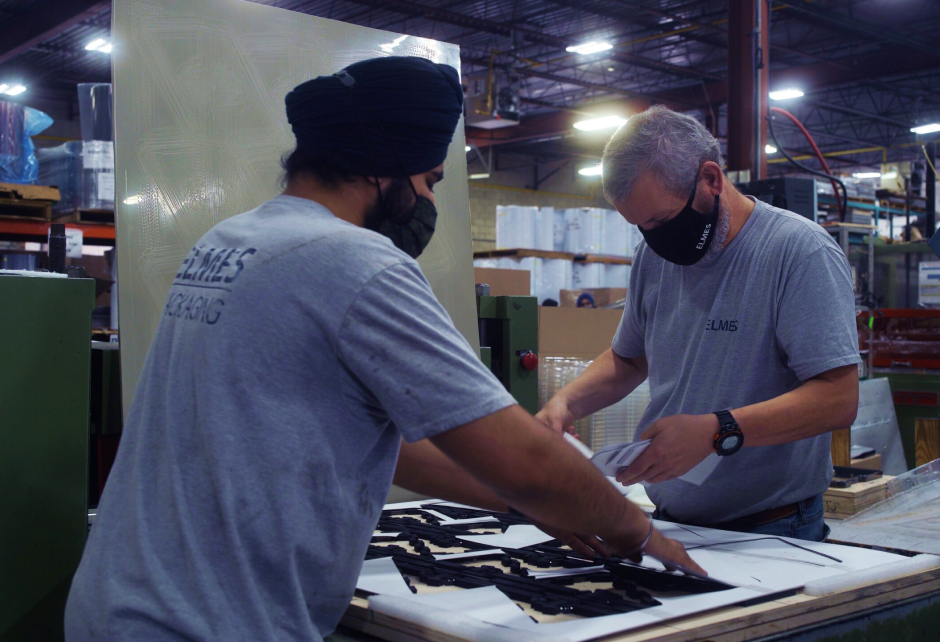
A medical device company brought us a well-developed tray design for a delicate tool. It looked production-ready, but our prototyping process flagged issues with formability and structural integrity. The fix came down to three specific changes. We reshaped the flange, reduced the tray depth and replaced a fragile snap closure with a more durable perimeter-locking mechanism.
Each change targeted one weakness. A shallower draw stretches the sheet less, leaving more material in the walls and corners where a deep pocket runs thin. A reworked flange gives the tray a stiffer frame to hold its shape. A perimeter lock spreads the closing force around the whole edge, where a single snap point concentrates it. The final design performs reliably at scale while protecting the product and keeping a polished look.
That tray was caught during prototyping, the least expensive point to find a problem. The same approach is what makes fixing a tray already in production manageable. Diagnose the specific weakness, change what needs changing and keep everything else that works.
How Do You Fix Packaging Without Disrupting Production?
The same principles apply to any tray that is already in production:
- Diagnose before you redesign. Study the damaged product and the conditions it travels through, so the fix targets the real failure from the start.
- Prototype against real conditions. Put functional prototypes through your own handling and shipping lanes with real product inside. Most Elmes prototypes are ready in 2 to 3 weeks, so validation fits inside a normal planning window.
- Keep current supply running. Stay on the existing tray until the new one has proven itself on your line, the same parallel approach that lets you switch packaging suppliers without disruption.
- Plan tooling for the long run. Whether the fix calls for adjusting the design or building new production tooling depends on what the diagnosis finds. Either way, the tooling investment should be planned around years of repeatable performance.
A Partner That Starts With the Problem
For over 50 years, Elmes has been creating custom thermoformed packaging in Mississauga for manufacturing, aerospace, pharmaceutical, where minor damage can mean a discarded product. Every fix we take on starts with your product and the conditions your packaging actually faces.
Through the Elmes360° Advantage process, you get a quote that maps out the path ahead, prototypes in weeks and a team that stays engaged from diagnosis through production. There is no cost until a prototype or sample is in your hands, so exploring a fix never commits you to one. Our work is manufactured under ISO 9001:2015 and FSSC 22000 certified systems, so the corrected tray performs the same way on every run.
Have a tray that’s causing more trouble than it should? Get a quote and our team will help you find the root cause and the right fix.