
Is Thermoforming the Right Fit for Your Packaging Application?
Choosing the right packaging method is one of the earliest and most influential decisions in product development. That choice affects design flexibility, material selection, tooling requirements, and how smoothly a package moves into production.
Thermoforming is a widely used manufacturing process across food, consumer retail, industrial, and pharmaceutical secondary packaging applications. Its versatility and ability to support custom packaging designs make it a common consideration during the early stages of packaging planning. At the same time, thermoforming is one of several viable manufacturing methods, and its suitability depends on the specific requirements of the product and the production environment.
Evaluating fit early helps packaging teams align design decisions with manufacturing realities. Factors such as application requirements, material options, production volumes, and downstream processes all play a role in determining whether thermoforming aligns with a given packaging need.
Understanding the Basics of Thermoforming
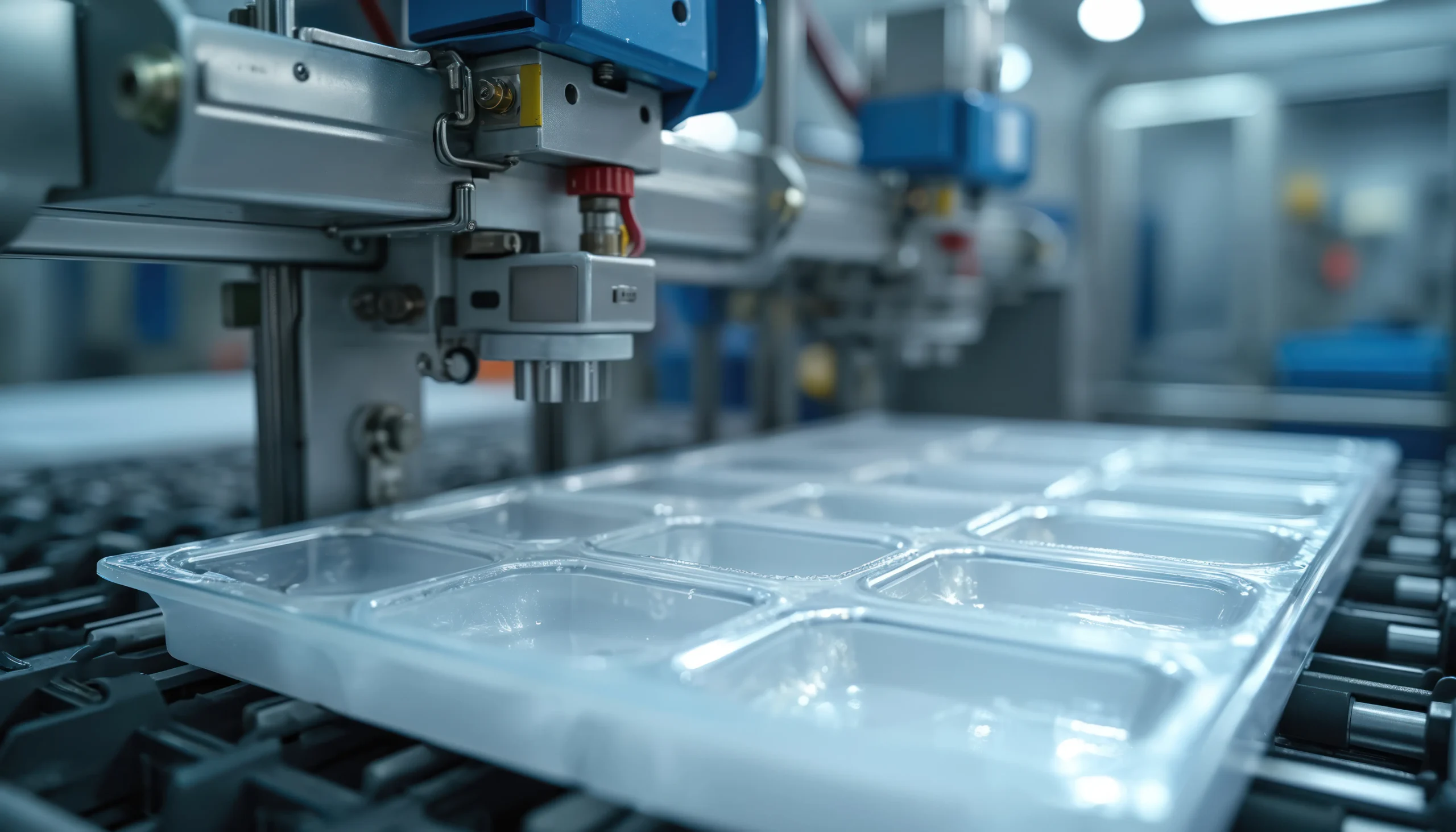
Thermoforming is a manufacturing process used to create custom plastic packaging by heating a plastic sheet and forming it over a mold. Once formed, the plastic is trimmed to create the final package shape. This approach is commonly used for thin-gauge packaging where consistency, repeatability, and design accuracy are important.
In packaging applications, thermoforming supports a wide range of shapes and configurations. Cavities, flanges, and overall geometry are defined during the tooling stage, allowing the package to be formed to the specific dimensions of the product it is designed to hold. This makes thermoforming well-suited for applications where off-the-shelf packaging formats do not meet product or presentation requirements.
Thermoforming is compatible with several commonly used packaging materials, including PET, RPET, and polypropylene. Material selection depends on factors such as product type, regulatory requirements, and end-use considerations. These materials are widely used across industries, including food, consumer retail, and industrial packaging.
Because tooling plays a central role in the thermoforming process, early design decisions can influence manufacturability and long-term production outcomes. For this reason, thermoforming is often evaluated alongside other packaging methods like injection molding early in the development process to determine overall fit.
Applications Where Thermoforming Is Commonly Used
Thermoforming is commonly used in packaging applications that require custom shaping and consistent presentation. The process allows packaging to be formed around a product’s dimensions, which is useful when standard packaging formats do not provide adequate fit or protection.
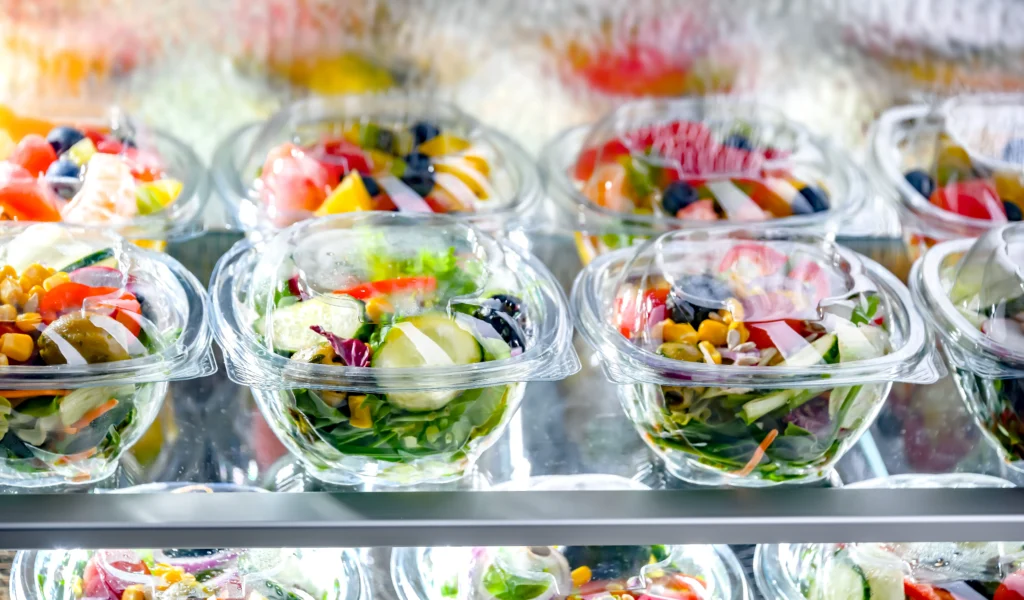
Many food and consumer retail products use thermoformed packaging for trays, blisters, and clamshells. These formats are often selected when product visibility, organization, or portioning is important. In these applications, thermoforming supports clear and rigid structures that help maintain product positioning throughout handling and distribution.
Thermoformed packaging is also used in industrial and manufacturing environments where parts need to be organized, protected, or presented in a consistent layout. Custom cavities can help separate components and reduce movement during transport or storage.
Across these use cases, thermoforming is typically considered when packaging requirements extend beyond basic containment and require more complex designs. Factors such as product geometry, handling conditions, and presentation needs often influence whether thermoforming is evaluated as a potential solution.
Production Volume and Project Scope Considerations
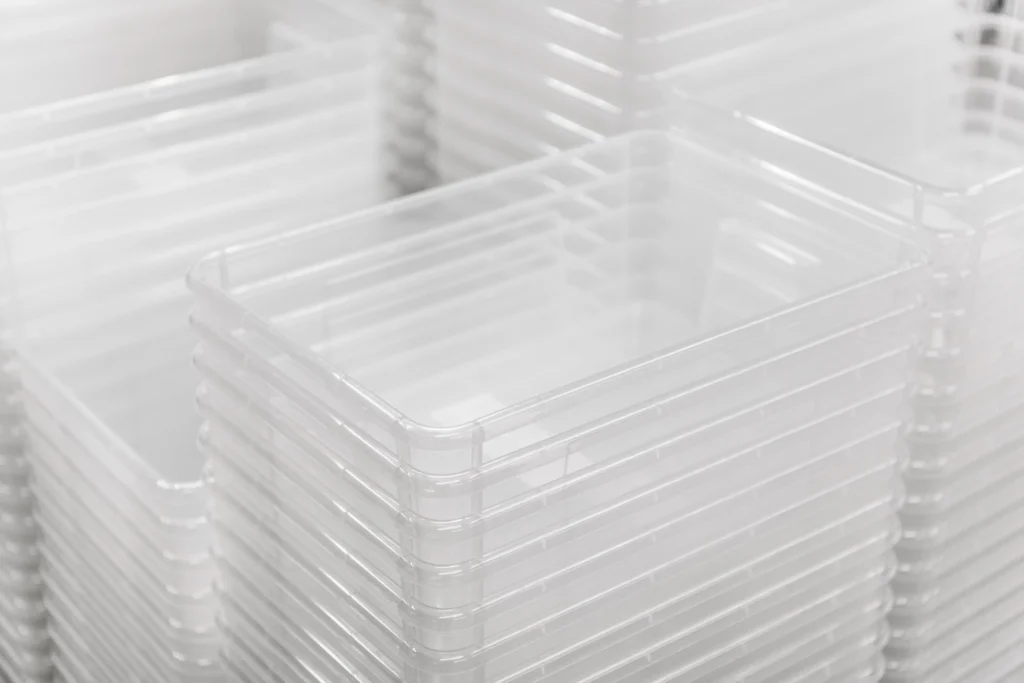
When deciding whether thermoforming is a suitable application for product packaging, it helps to consider the scale and scope of the project. The expected production volume can influence the type of tooling required and the overall planning for the package. Smaller runs may be supported with simpler tooling, while larger volumes typically require more robust tooling to maintain consistency over time. Understanding this early can help determine whether thermoforming aligns with the project’s needs.
The complexity of the package is another key factor. Products with unique shapes, multiple compartments, or specialized presentation requirements often need detailed cavity designs. Thermoforming can accommodate these design features, but highly customized packages may require additional planning to ensure they can be produced reliably at the intended volume.
Evaluating both volume and design complexity together provides insight into whether thermoforming fits the application. Packages that combine moderate to high customization with compatible production volumes are often a strong match, while projects with very low complexity or extremely high-volume standardized formats may benefit from considering alternative methods. Considering these aspects early helps packaging teams make informed decisions before moving into design or tooling stages.
Material Options and Design Requirements
Material selection and design features play a central role in determining whether thermoforming is a suitable packaging method. Thermoforming supports several commonly used materials, including PET, RPET, and polypropylene, each of which has characteristics that make it suitable for particular applications. Considering which material aligns with the product’s needs is an important step in evaluating fit.
Design elements such as wall thickness, draft angles, and flange dimensions influence how easily a package can be formed and trimmed. Packages with more intricate shapes or multiple compartments may require careful attention during the design phase to ensure they can be manufactured consistently. Early consideration of these design aspects helps identify whether the intended package can be produced reliably using thermoforming.
Assessing material and design together provides insight into suitability. Applications that require clear, rigid structures and custom shapes often align well with thermoforming, while designs that are extremely simple or require materials outside the typical thermoforming range may be better served by alternative packaging methods. Reviewing these factors before finalizing design decisions helps teams determine whether thermoforming is a practical option for their product.
Manufacturing and Downstream Process Factors
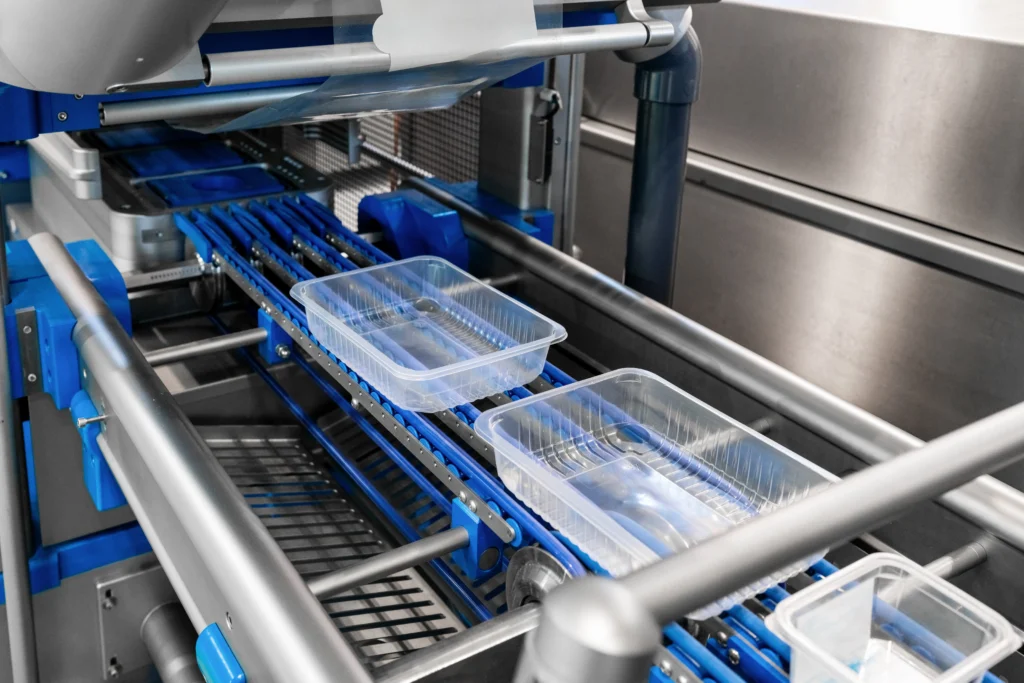
When evaluating thermoforming for a packaging application, it is important to consider how the package will interact with manufacturing and downstream processes. Packages need to move efficiently through filling, sealing, and packing operations, and design features such as cavity layout, flanges, and rigidity can influence how smoothly this occurs.
Thermoforming offers flexibility in creating shapes and structures that can support consistent handling, but it is important to assess whether the intended design aligns with production requirements. Packages that are too complex or have features that complicate automation may require additional planning or adjustments during manufacturing.
Considering how a package will perform after production helps identify whether thermoforming is appropriate for the intended application. Reviewing manufacturing steps early, along with design and material choices, allows teams to evaluate potential challenges and determine if the process can meet operational needs without compromising consistency or reliability.
When Thermoforming May Not Be the Best Fit
Thermoforming is suitable for a wide range of packaging applications, but there are situations where other methods may be more appropriate. It is generally not ideal for parts that require extremely tight tolerances, highly complex geometries such as threads, snap-fits, or deep undercuts, or applications that demand high structural strength.
Thermoforming is also less suitable for fully enclosed hollow parts or designs that must withstand internal pressure or require precise dimensional consistency. In these cases, alternative manufacturing methods can provide the precision or structural performance needed for the application.
Understanding these limitations in the context of design complexity, material requirements, and functional needs helps packaging teams make informed decisions early in the development process. Reviewing these factors before moving into tooling or production ensures that the selected method aligns with the goals of the project.

Making an Informed Packaging Decision
Determining whether thermoforming is the right fit requires a review of multiple factors, including production volume, design complexity, material selection, and downstream manufacturing requirements. Considering these elements together provides a clearer picture of whether thermoforming aligns with the needs of a specific packaging application.
Engaging with a packaging partner early can help teams evaluate fit before committing to design or tooling decisions. Reviewing options in the context of the product, intended use, and operational environment supports informed decision-making and can reduce revisions later in the development process.
If you are evaluating packaging options for a product, our team can help assess whether thermoforming is a practical solution. Contact us to discuss your project and explore how the process may align with your packaging needs.