
Why is Packaging Prototyping Essential Before Production?
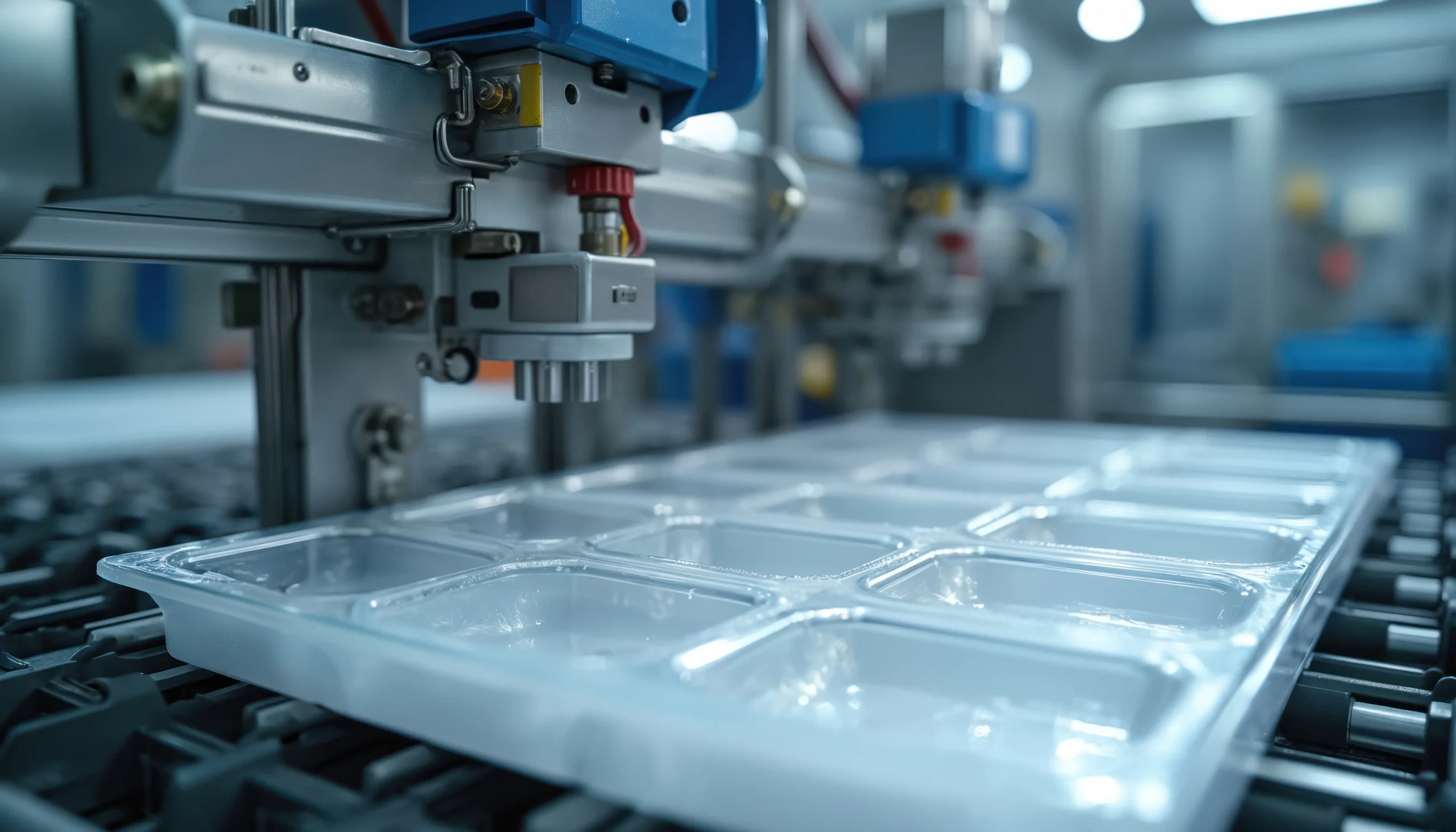
Choosing the right packaging method is one of the earliest and most influential decisions in product development. This choice affects design flexibility, material selection, tooling requirements, and how smoothly a package moves into full-scale production. Because tooling plays such a central role in the thermoforming process, early design decisions directly influence manufacturability and long-term production outcomes.
However, moving directly from a digital concept to a high-volume run without physical testing creates significant risks. A mistake at this stage can lead to wasted materials, production delays, or packaging that fails to perform in real-world conditions. Evaluating fit early helps packaging teams align complex design decisions with manufacturing realities, ensuring that factors such as application requirements and material options are fully vetted.
To de-risk a project, an experienced manufacturing partner utilizes a dedicated prototyping phase to validate that the intended package design can be produced reliably and efficiently before significant capital is committed to final production tooling.

What is the Role of a Packaging Prototype?
A prototype serves as the critical bridge between a CAD design and a high-volume manufacturing run. In custom thin-gauge thermoforming, a prototype enables packaging teams to evaluate the form, fit, and function of a design before creating permanent, expensive tooling.
Evaluating a physical sample provides technical insights that digital renders cannot capture. For example, it allows you to verify that the package meets the exact dimensions of the product it is designed to hold. Furthermore, it serves as a testing ground for material performance, confirming that the selected plastic—such as PET, Polypropylene, or RPET—provides the necessary clarity and structural integrity for the specific application.
Finally, prototyping validates functional fit, ensuring the product remains protected and positioned correctly throughout the handling and distribution process.
How Prototyping Identifies Design Risks Early
Skipping the prototyping phase often leads to “invisible” risks that only surface when production is already underway. A thorough prototyping phase helps uncover potential technical failures in cavity geometry, flange dimensions, and wall thickness.
A manufacturing partner uses prototypes to prevent common issues:
Structural Weakness: Identifying areas prone to cracking or warping under the stress of stacking and transport.
Sealing Inconsistency: Ensuring the flange is perfectly flat and wide enough to support reliable sealing films and maintain barrier integrity.
Automation Incompatibility: Confirming the design integrates seamlessly with downstream filling and packing operations.
By addressing these challenges during the prototyping phase, teams can evaluate potential manufacturing hurdles before committing to tooling and production, thereby minimizing the risk of unexpected issues. Ultimately, this process ensures that the selected design aligns with the project’s functional goals, reducing the risk of costly revisions and ensuring consistent results once the product is ready for mass manufacturing.
The Strategic Importance of Prototyping Speed
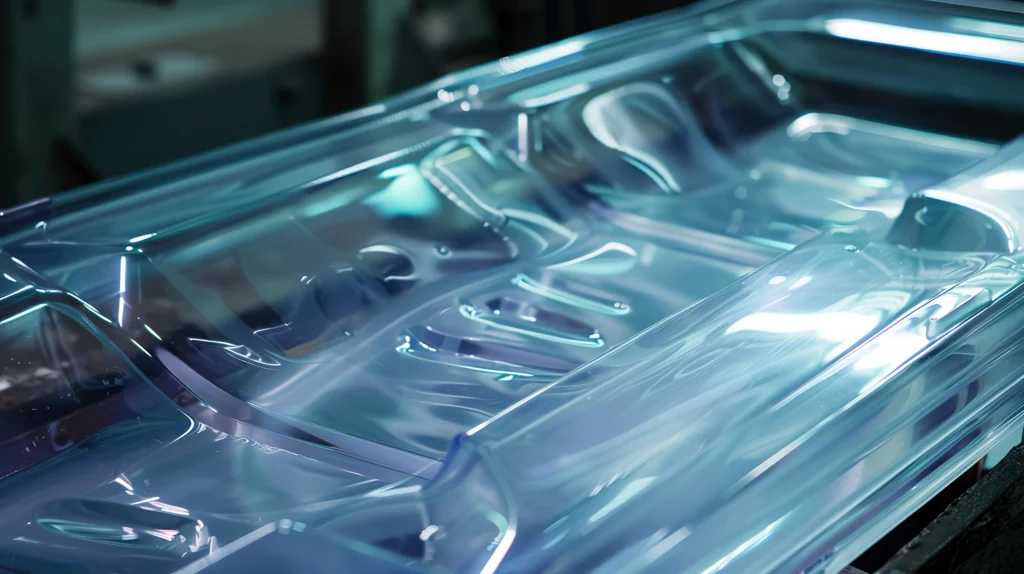
In product development, time-to-market is a critical factor, but speed should not come at the expense of precision. A manufacturing partner should be able to provide functional prototypes quickly to allow the design team to maintain momentum. This rapid feedback loop allows teams to iterate early and make design adjustments based on physical testing before finalizing production tooling.
Beyond the technical benefits, having a physical prototype is vital for securing stakeholder approval. It provides a tangible sample for retail presentations or internal quality reviews.
Ultimately, this process validates cost-efficiency, ensuring the design is optimized for the intended production volume and project scope before significant capital is committed.
Transitioning from Prototype to Production-Ready Tooling
Once a prototype is validated, the focus shifts toward long-term production outcomes. A successful prototyping phase provides the data necessary to engineer robust production tooling that maintains consistency over thousands, or even millions, of units.
During this transition, a manufacturing partner evaluates the project scope to determine the most efficient tooling path. While smaller runs may only require simple molds, larger production volumes demand more durable tooling to ensure that every package—from the first to the last—meets the original design specifications.
By finalizing these details during the prototyping phase, teams can move into the production stage with a clear roadmap, avoiding the mechanical stress and technical revisions that often plague unvetted designs.
Partnering for a Flawless Launch
A successful prototype is the foundation of a reliable production run. When you move from prototype to production with a partner who understands material behaviour and manufacturing constraints, you reduce the risk of mid-production revisions and product failure.
At Elmes Packaging, we’ve spent over 50 years solving complex packaging challenges. We partner with you from initial quoting to final fulfillment, delivering functional prototypes in just 2–3 weeks. Our goal is to ensure your packaging is precision-engineered, reliable, and ready to protect your product through every stage of the supply chain.
Ready to see how our prototyping process can support your next launch?